
Break the conclusion down into a sequence of technical statements
A statement about a failure's cause usually combines several assertions: a defect was found, its development mechanism established, its time of origin determined and its effect on component operation explained. A review sets out this chain. Each transition requires its own grounds. A photograph of a fractured part may support the presence of damage but not every subsequent link in the explanation.
A four-column table is useful: observation, interpretation, supporting material and alternative explanation. For example, a recorded fault message is a system observation; the proposition that it reflects the primary failure already needs justification. The reviewer checks whether an initial assumption became an established fact between report sections.
Ask which signs distinguish the stated mechanism
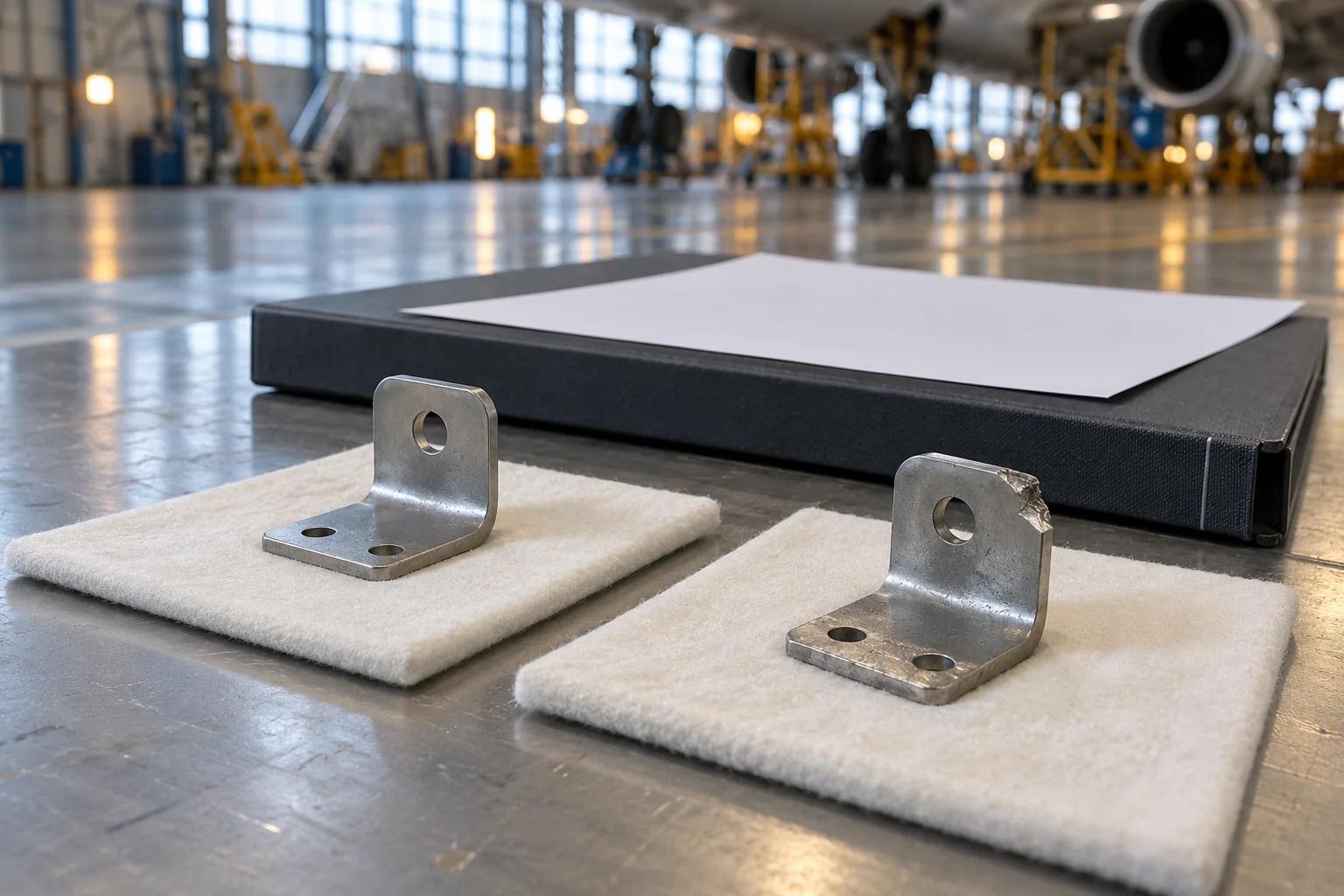
For mechanical fracture, it matters whether the origin, propagation direction and areas with different fracture signs are described. For an electrical component, documented relevant check results and the condition of associated elements are significant. One outward manifestation can correspond to several mechanisms. Naming a defect without describing diagnostic signs does not allow the choice of explanation to be checked.
Image scale and quality must support the conclusion reached. An overall photograph shows damage location but does not replace examination of microscopic features if the author's conclusion relies on them. Cleaned, abraded or handling-damaged surfaces are noted separately. If a significant area has been lost, the effect of its loss must be assessed rather than its properties reconstructed through confident wording.
Distinguish primary failure from secondary damage
When an assembly fails, neighbouring components may be damaged by the event already underway. The reviewer therefore seeks an explanation of the sequence: which element first ceased functioning, which traces may have appeared later and what supports the order. Proximity of two damaged areas does not yet establish the direction of causation. The explanation must be checked for consistency with all available observations.
Component removal data, defect assessments, recorded entries and subsequent handling information are compared. The source, precision and alignment of timestamps are checked. If the time difference is comparable to the interval between events, a categorical sequence may remain unproven. The review must show which link depends on this and which additional information could clarify it.
Check initial conditions and competing explanations
An explanation involving a material defect, incorrect repairs or external exposure requires checking the relevant conditions. Component variant, operating time, modifications performed, surrounding systems and applicability of the technical documentation used matter. The fact that a failure occurred after servicing establishes neither the operation breached nor the mechanism by which it affected the result.
Alternatives are assessed using signs that distinguish them. It is useful to ask which observations each explanation would predict and whether they appear in the materials. A list of possibilities without such checking is of little help. At the same time, missing data do not justify declaring every alternative equally likely: the significance of the gap must be linked to a particular technical question.
Formulate a comment with a clear consequence
A substantive comment identifies a report page, the statement checked, the gap found and its effect. Some shortcomings can be resolved by clarifying a reference or recalculating. Others require component examination, an original file or reconstruction of history. Distinguishing them helps ensure the need for new data is not hidden behind a general demand to rewrite the conclusion.
A review may support part of the causal chain and leave another part uncertain. This is a substantive outcome when boundaries are stated precisely. A review does not replace an official aviation occurrence investigation, airworthiness confirmation or a decision to return a component to service. Its task is to assess the technical justification of the explanation provided and identify what else is needed to check it.